Analisa Pelumas Spectro Scientific MiniVisc 3000 Series – Portable Kinematic Viscometer

Spectro Scientific MiniVisc 3000 Series – Portable Kinematic Viscometer

The MiniVisc 3000 (Q3000) Series is a portable, solvent-free, temperature-controlled kinematic viscometer designed for on-site lubricant viscosity testing. It provides fast and accurate results, solving challenges in measuring compressor and refrigeration oils that often suffer from outgassing problems with traditional viscometers.
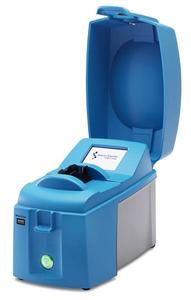
With its patented split cell design, gases dissipate through the sides of the cell rather than bubbling through the sample, eliminating errors and providing reliable viscosity measurement in the field.

Highlights

The MiniVisc 3000 series (formerly the SpectroVisc Q3000 Series) viscometers are the first truly portable, solvent-free, temperature-controlled kinematic viscometers, providing high-accuracy measurements for easy detection of viscosity variations caused by contamination, mix-up and oil degradation. The devices were designed to determine kinematic viscosity at 40°C in the field for applications where immediate results are essential for determining the health of critical equipment.


Principle of Operation
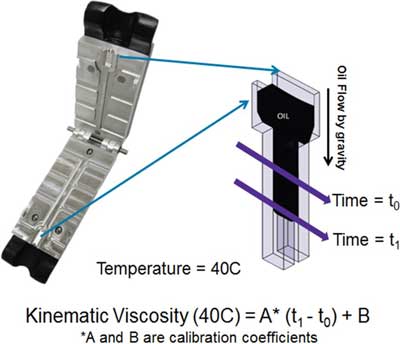
MiniVisc Principle of Operation

  • Uses only 60 µL of oil (about 4 drops).
  • Oil flows through a 100 µm split capillary channel by gravity.
  • Infrared sensors measure flow time → calculates kinematic viscosity.
  • Cell is temperature controlled at 40°C ±0.1°C for consistent accuracy.
  • Easy to clean: open the split cell and wipe with a pad.

Key Highlights

The MiniVisc 3000 Series (formerly SpectroVisc Q3000) is the first truly portable viscometer for immediate field results:

  • Direct Kinematic Viscosity Measurement: No density check or extra calculation needed.
  • Small Sample Size: Only 60 µL required.
  • Temperature Controlled: Maintains 40°C for accurate results.
  • Fast Analysis: Test time from seconds to a few minutes, proportional to viscosity.
  • Portable & Lightweight: Less than 1.8 kg (4 lbs), battery powered for 6+ hours.
  • Self-Contained: Touchscreen display, no PC required.
  • Works with Transparent & Opaque Oils: Reliable results even with dark/dirty samples.
  • Solvent-Free Cleaning: No hazardous solvent handling needed.
  • ASTM Method D8092 Compliant: Globally recognized test standard.

Features & Benefits

Features Benefits
Direct viscosity measurement Immediate, accurate readings with no extra calculation.
Split-cell capillary channel Handles outgassing oils reliably, accurate in the field.
Self-contained design Touch screen, battery & processor built-in, no PC required.
Small sample size Only 60 µL needed, minimal impact on lubricant level.
Temperature controlled (40°C ±0.1°C) Ensures consistent accuracy across all samples.
No cleaning solvent Easy cleaning with pad, safer for remote sites.
Battery operated Over 6 hours of portable operation, worldwide charger included.

Product Models

  MiniVisc 3000 MiniVisc 3050
Measurement Range 10 cSt – 350 cSt 1 cSt – 700 cSt
100°C Viscosity Extraction (via VI input) No Yes
ASTM Method ASTM D8092

Combination Kits

  • Viscometer + FerroCheck Kit
    Viscometer + FerroCheck Kit
    Combine FerroCheck 2000 with MiniVisc for dual measurement of viscosity and ferrous wear particles in the field. Provides quick insights into oil condition and machine wear.
  • FluidScan + Viscometer Kit
    FluidScan + Viscometer Kit
    Combines FluidScan InfraRed Analyzer with MiniVisc for a complete oil health check (oxidation, nitration, sulfation, TAN, TBN, water content).

Industrial Applications

  • Power Generation: Viscosity monitoring in turbines, compressors, and diesel engines.
  • Marine & Shipping: Onboard oil analysis for propulsion and auxiliary engines.
  • Mining & Heavy Equipment: Reliable measurement in remote, harsh environments.
  • Transportation & Aviation: Quick viscosity check for engine oils in field service.
  • Manufacturing: Detect oil degradation in hydraulics and gearboxes.
  • Oil & Gas: Portable analysis for offshore rigs and onshore facilities.

The MiniVisc 3000 Series ensures maintenance teams get fast, accurate, solvent-free viscosity measurements in the field, helping industries reduce downtime, extend equipment life, and optimize oil change intervals.

MiniVisc 3000 for Compressor oils can create unique challenges when trying to measure viscosity. Dissolved gases from refrigerants, in particular, tend to bubble out when these oils are measured using traditional viscometers. This can create errors in the measurement, typically causing readings to be much lower than they should be.

One way to get around this problem is to allow the oil sample to degas before making the viscosity measurement. One major drawback is that it can take several hours or up to a day for the oil to degas sufficiently. Fortunately there’s a better way.

The Spectro Scientific Minivisc 3000 or Q3000 viscometer has a unique split cell design that allows oil to flow through the measurement cell uninterrupted by outgassing. The gas in the sample is dissipated out the sides of the cell, rather than bubbling up through the sample as it is being measured. In this brief video, Dan Walsh, Director of Applications and Technical Services, explains how this works.

Comparison: MiniVisc 3000 vs Traditional Lab Viscometers

Aspect MiniVisc 3000 Traditional Lab Viscometer
Sample Volume 60 µL (a few drops) Typically 5–10 ml
Mobility Portable, battery powered, field-ready Stationary, lab-only
Time to Results Seconds to minutes Minutes to hours (including sample prep)
Cleaning Solvent-free, quick wipe Often requires solvent cleaning & waste handling
Accuracy ±3% RSD, temperature controlled 40°C ±0.1°C High accuracy, but dependent on lab conditions & preparation
Field Suitability Ideal for on-site oil condition monitoring Not practical for field use
Cost of Operation Lower (no solvents, minimal consumables) Higher (solvents, lab overhead)

Combination Kits

The MiniVisc units complement other portable oil analysis tools. They are all battery operated and require no solvent to clean.

  • Viscometer/FerroCheck Kit: Combines MiniVisc 3000 with FerroCheck 2000 for viscosity & ferrous wear monitoring in one package.
  • FluidScan/Viscometer Kit: Adds chemical condition analysis (oxidation, TAN, TBN, water, nitration, sulfation) for a complete oil health check.

Industrial Applications

MiniVisc 3000 sudah banyak digunakan di berbagai industri kritikal untuk memastikan keandalan peralatan dan menghindari downtime mahal. Berikut beberapa contoh penerapan di lapangan:

  • Marine Industry – Monitoring viskositas pelumas mesin utama kapal dan auxiliary engines secara cepat di atas kapal, tanpa harus menunggu hasil laboratorium darat.
  • Power Generation – Digunakan untuk mengecek kondisi turbin gas dan turbin uap, sehingga potensi kegagalan bearing akibat oli rusak dapat dicegah lebih awal.
  • Mining & Heavy Equipment – Memastikan oli pada dump truck, excavator, dan peralatan tambang tetap dalam spesifikasi, meskipun beroperasi di lokasi terpencil.
  • Oil & Gas – Menyediakan hasil cepat untuk pelumas kompresor, pompa, dan generator di platform lepas pantai maupun fasilitas onshore.
  • Industrial Manufacturing – Cocok untuk pemantauan oli pada gearbox, kompresor udara, dan sistem hidrolik di pabrik yang membutuhkan analisa cepat tanpa mengganggu produksi.

Dengan mobilitas tinggi dan kecepatan hasil pengukuran, MiniVisc 3000 menjadi solusi ideal bagi tim maintenance yang membutuhkan keputusan cepat di lapangan.

Industrial Applications & Benefits

Industry Application Key Benefit
Marine Monitoring engine oil for main engines & auxiliary generators onboard ships Reduce downtime at sea by detecting oil degradation early
Power Generation Viscosity monitoring of turbine oils in gas & steam turbines Prevent costly turbine bearing failures and extend oil drain intervals
Mining & Heavy Equipment On-site viscosity check of engine and hydraulic oils in dump trucks, excavators, loaders Enable rapid decision making in remote locations, avoid unplanned breakdowns
Oil & Gas Lubricant condition monitoring in compressors, pumps, and generators (onshore & offshore) Enhance reliability of critical rotating equipment in extreme environments
Industrial Manufacturing Checking gearbox, compressor, and hydraulic system oils in factories Support predictive maintenance and minimize production downtime